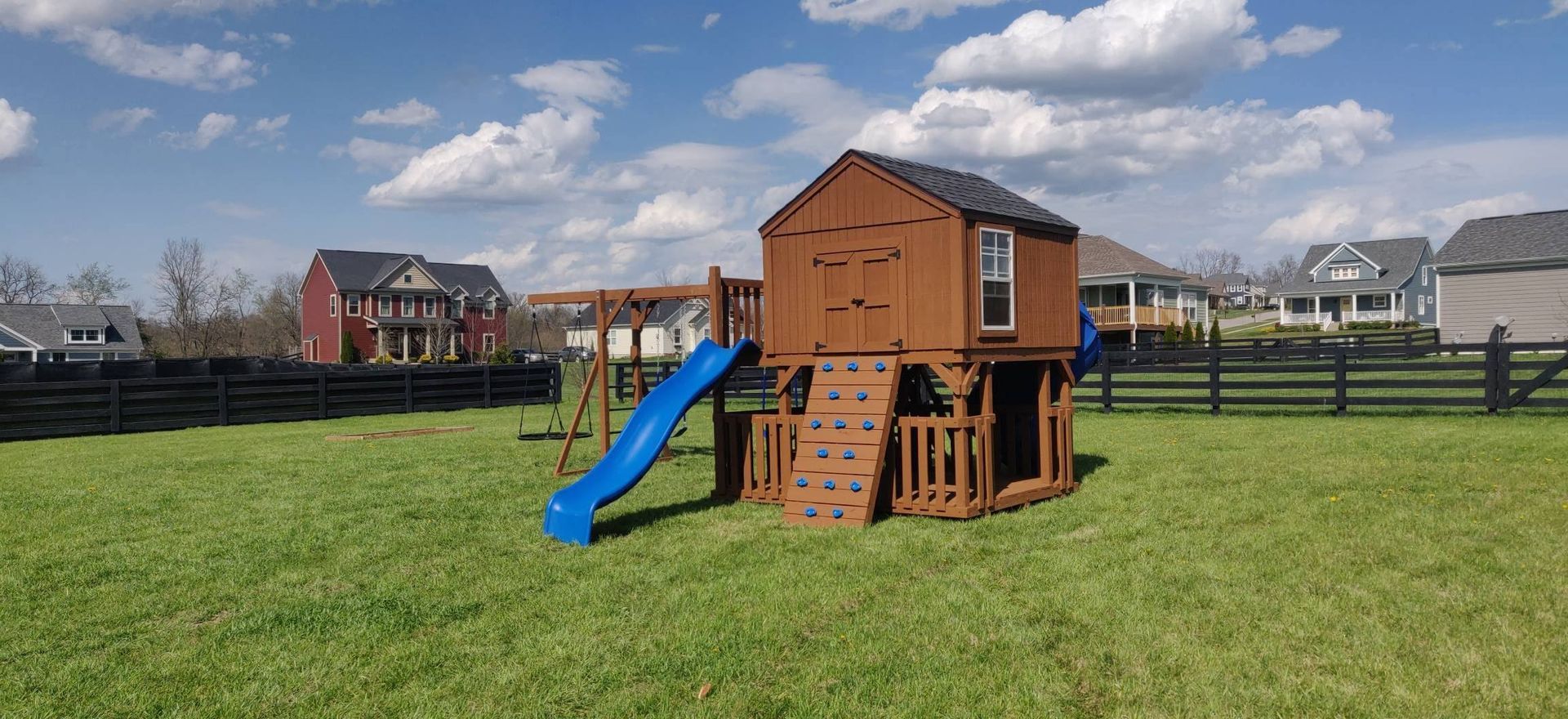
Seasonal Safety: Preparing Your Playset for Spring, Summer, Fall, and Winter
A backyard playset provides children with hours of outdoor fun, from swinging and sliding to climbing and imaginative play. However, changing weather conditions can affect the safety, stability, and overall condition of your wooden swing set throughout the year. Rain, heat, falling leaves, freezing temperatures, and seasonal storms can all contribute to wear and tear if your playset isn't properly maintained.
Seasonal playset maintenance is one of the best ways to help keep your backyard playground clean, sturdy, and ready for safe outdoor fun. By inspecting your equipment and addressing potential issues throughout the year, you can help protect your investment and create a safer play environment for your family.
Whether you own a new wooden playset or have had a backyard swing set for years, this guide explains how to prepare your playset for spring, summer, fall, and winter.
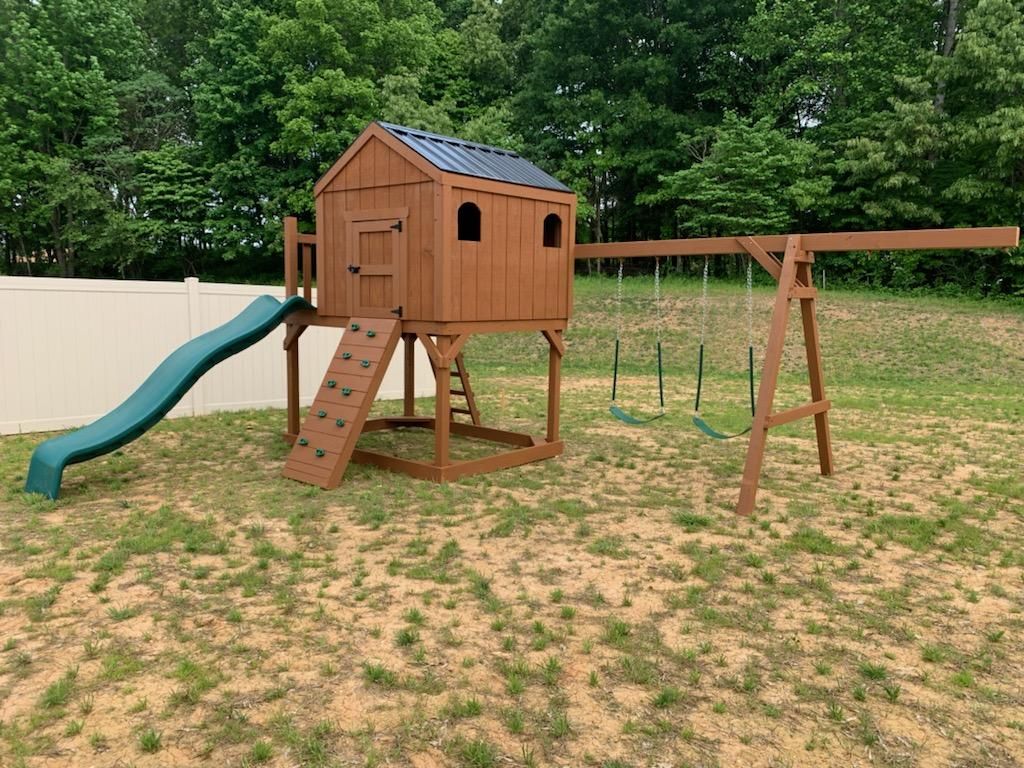
Why Is Seasonal Playset Maintenance Important?
Outdoor playsets are exposed to the elements year-round. Even durable wooden swing sets can experience changes caused by moisture, sunlight, temperature fluctuations, and regular use.
Over time, these conditions may contribute to loose hardware, worn swing components, wood deterioration, damaged slides, or shifting support posts. Seasonal inspections help you identify these issues before they become more serious.
Regular backyard playset maintenance can help you:
- Identify loose bolts, screws, and other hardware.
- Check swings, chains, ropes, and climbing accessories for wear.
- Look for splinters, cracks, and signs of wood deterioration.
- Keep slides, platforms, and other play surfaces clean.
- Maintain appropriate protective surfacing around the playset.
- Address weather-related damage before children use the equipment.
A consistent maintenance routine is especially important for families with children who use their playsets frequently. Taking time to inspect your equipment at the beginning of each season helps ensure it remains in appropriate condition for continued use.
Spring Playset Maintenance: Inspect for Winter Damage
Spring is an ideal time to prepare your backyard playset for increased outdoor activity. After months of cold temperatures, rain, snow, or freezing conditions, your swing set may need attention before children begin using it regularly again.
1. Inspect the Entire Wooden Playset
Start with a thorough visual inspection of the entire structure. Check the support posts, beams, platforms, ladders, railings, and climbing walls for visible damage.
Look for cracks, splintering, rot, loose boards, and areas where wood may have deteriorated. Pay particular attention to the base of support posts and other areas that remain in contact with moisture.
If you notice structural damage or instability, stop using the playset until the issue has been properly assessed and repaired.
2. Tighten Hardware and Check Moving Parts
Temperature changes and repeated use can contribute to loose connections over time. Inspect accessible bolts, screws, brackets, and other fasteners according to the manufacturer's maintenance instructions.
Check swing hangers, chains, ropes, and connectors for excessive wear, rust, fraying, or damage. Replace worn components with compatible parts approved for your playset.
Avoid allowing children to use equipment with loose hardware or damaged swing components.
3. Clean Slides, Swings, and Play Surfaces
Winter weather can leave dirt, leaves, and other debris on your playset. Clean slides, swings, handholds, and platforms with a method appropriate for the materials.
Use mild soap and water when suitable, and avoid harsh chemicals that could damage surfaces or leave unsafe residue. Allow wet surfaces to dry before children begin playing.
4. Check the Ground and Protective Surfacing
Winter weather and heavy rainfall can shift soil and wash away protective surfacing around the playset.
Inspect the area beneath and around swings, slides, and climbing equipment. Look for exposed roots, uneven ground, drainage problems, and areas where loose-fill materials may need replenishing.
Maintain the protective surfacing recommended for your equipment, including the appropriate depth and coverage. Grass and bare soil should not automatically be assumed to provide adequate impact protection.
Spring safety tip: Complete your inspection before the first big day of backyard play rather than waiting until children are already using the equipment.
Summer Playset Safety: Protect Against Heat and Heavy Use
Summer often brings the most frequent playset use. Longer days and school vacations mean children may spend hours swinging, climbing, and sliding outdoors. At the same time, high temperatures, strong sunlight, and thunderstorms can create additional maintenance concerns.
1. Check Playset Surfaces for Excessive Heat
Slides, swing seats, metal hardware, and other exposed components can become hot in direct sunlight. Before children play, touch-test surfaces carefully and check for excessive heat that could cause burns.
If surfaces are too hot, wait for them to cool or move playtime to a cooler part of the day. Shade structures or strategically placed trees may help reduce direct sun exposure, provided they do not introduce hazards such as falling branches.
2. Inspect Swings and Climbing Accessories More Frequently
Frequent use can increase wear on moving parts and connection points. Check swing seats, ropes, chains, climbing holds, and other accessories regularly during the busiest months.
Watch for frayed ropes, cracked plastic, exposed sharp edges, loose connections, and signs of deterioration. Replace damaged parts promptly rather than attempting makeshift repairs.
3. Keep the Playset Clean and Dry
Dust, pollen, mud, and other debris can accumulate during summer. Clean the playset as needed, especially after storms or periods of heavy use.
Pay attention to shaded areas where moisture may linger. If you find persistent discoloration or suspected mold growth, use a cleaning method suitable for the material and follow the manufacturer's recommendations.
4. Check for Storm Damage
Summer thunderstorms and strong winds can affect trees, fencing, and nearby structures. After severe weather, inspect the playset for fallen branches, shifted supports, damaged accessories, and debris.
Do not let children use the playset until you have confirmed that the structure and surrounding area remain in safe condition.
5. Supervise Children and Maintain Clear Play Zones
Make sure the area around the playset remains free of bicycles, toys, yard equipment, and other obstacles. Keep the designated fall zones clear and ensure children have enough room to swing and move without colliding with nearby objects.
Choose playset accessories that are appropriate for the children's ages and abilities, and follow the manufacturer's guidance for use and supervision.
Summer safety tip: Check surface temperatures and the condition of high-use components before play, especially during extended periods of hot weather.
Fall Playset Maintenance: Prepare for Changing Weather
Fall is a great time to inspect your wooden swing set before colder temperatures arrive. Falling leaves, increased moisture, and seasonal storms can affect the playset and the surrounding yard.
1. Remove Leaves and Debris
Fallen leaves can collect on platforms, steps, ladders, and beneath the playset. When wet, they may create slippery surfaces and conceal damage or other hazards.
Remove leaves, sticks, and debris regularly. Keep the area beneath the playset clear enough to inspect the protective surfacing and identify drainage problems.
2. Look for Moisture Damage and Wood Deterioration
Frequent rain and damp conditions can expose areas where water collects or wood remains wet for extended periods.
Inspect wooden beams, joints, and support posts for signs of rot, cracking, or deterioration. Pay attention to areas near the ground and places where water may collect.
If the wood appears soft, severely cracked, or structurally compromised, discontinue use until the problem has been assessed.
3. Check Protective Surfacing and Drainage
Autumn rainfall can displace loose-fill protective materials and create muddy areas beneath a playset.
Check that the required surfacing remains at the manufacturer's recommended depth and covers the designated impact areas. Correct drainage problems where possible, and replenish surfacing when needed.
Make sure water does not pool around support posts or create unstable ground beneath the structure.
4. Prepare for Wind and Severe Weather
Inspect the playset and surrounding trees for potential hazards before seasonal storms arrive. Follow the manufacturer's instructions for securing accessories or preparing equipment for severe weather.
Remove or secure loose items as appropriate, and keep the area around the playset free of branches and other objects that could fall or become airborne.
Fall safety tip: Don't let a clean-looking playset fool you. Wet leaves can conceal loose hardware, damaged wood, and problems with the ground beneath the equipment.
Winter Playset Maintenance: Protect Your Swing Set During Cold Weather
Winter brings freezing temperatures, ice, snow, and repeated freeze-thaw cycles in many regions. These conditions can affect wooden playsets and make outdoor equipment unsafe to use.
Whether your family continues playing outdoors during mild winter days or puts the playset away until spring, seasonal precautions are important.
1. Inspect for Cracks, Loose Connections, and Weather Damage
Cold temperatures and moisture can place additional stress on some materials and connections. Inspect accessible structural components, fasteners, swing hangers, and accessories periodically.
Look for new cracks, shifting supports, corrosion, or other changes that may have developed since your last inspection.
If the structure becomes unstable or a critical component is damaged, keep children off the playset until repairs are completed.
2. Keep Snow and Ice Off Play Surfaces
Snow and ice can make slides, steps, ladders, platforms, and swings slippery. Never allow children to use equipment with icy or snow-covered surfaces.
Remove snow when it can be done safely and without damaging the equipment. Wait until surfaces are fully clear and dry before allowing play to resume.
3. Follow Manufacturer Guidance for Winter Protection
Not every playset requires the same winter preparation. Follow the manufacturer's instructions for cleaning, protecting wood, caring for accessories, and preparing the equipment for extended periods of nonuse.
If the manufacturer recommends a particular wood treatment or sealant, use a product suitable for the playset's materials and allow it to cure fully as directed before use.
Avoid applying unapproved chemicals or coatings to swing seats, slides, climbing holds, or other surfaces children touch.
4. Decide Whether to Limit Winter Use
You do not necessarily have to dismantle a wooden playset for winter. However, use should depend on the equipment's condition, weather, ground stability, and the manufacturer's recommendations.
Keep children off the playset during icy conditions, freezing rain, severe weather, or any period when the ground or structure appears unstable.
If your family takes a seasonal break from outdoor play, inspect the playset again before allowing children to use it in the spring.
Winter safety tip: Never assume a playset is safe simply because it was inspected in the fall. Check conditions again after snow, ice, freezing rain, or strong storms.
How Often Should You Inspect Your Backyard Playset?
Seasonal inspections provide a helpful starting point, but they should not be your only maintenance routine.
For better playset safety, consider combining regular visual checks with more detailed inspections throughout the year.
- Before each use: Check for visible hazards, wet or slippery surfaces, damaged accessories, and debris.
- Regularly during active use: Inspect swings, ropes, chains, fasteners, and high-use components for wear.
- At the beginning of each season: Perform a more thorough inspection of the structure, hardware, protective surfacing, and surrounding area.
- After severe weather: Look for fallen branches, shifted supports, damaged components, and changes to the ground or surfacing.
- According to the manufacturer's schedule: Complete any recommended maintenance, repairs, and inspections.
Always follow the playset manufacturer's specific instructions. If you identify a structural problem, do not rely on routine tightening or cosmetic repairs to make the equipment safe.
Essential Backyard Playset Safety Checklist
Use this checklist when preparing your swing set for a new season.
- Inspect support posts, beams, platforms, and railings.
- Check for cracks, splinters, rot, and other wood damage.
- Inspect bolts, screws, brackets, and swing hangers.
- Look for frayed ropes, worn chains, and damaged swing seats.
- Check slides, ladders, climbing walls, and handholds.
- Remove leaves, dirt, and other debris.
- Check protective surfacing depth and coverage.
- Inspect the ground for erosion, uneven areas, or pooling water.
- Remove obstacles from designated play and fall zones.
- Check for heat, ice, storm damage, and other weather-related hazards.
- Confirm that age-appropriate accessories and safety features are in place.
- Address any problems before children return to play.
If you cannot determine whether a damaged component is safe, contact the manufacturer or a qualified playset professional for guidance.
Why Quality and Proper Installation Matter for Long-Term Playset Safety
Routine maintenance is important, but it works best when combined with a well-designed playset and proper installation.
A quality wooden playset should be appropriate for your yard, your children's ages, and the types of activities they enjoy. Correct assembly, suitable placement, and adequate protective surfacing all contribute to a safer backyard play environment.
When shopping for a new swing set, consider the following:
- Durable construction: Look for materials and components suited to outdoor use.
- Age-appropriate features: Choose swings, slides, and climbing elements that match your children's abilities and the manufacturer's age recommendations.
- Room to play: Make sure your yard can accommodate the structure and its required clearance zones.
- Proper installation: Follow the manufacturer's assembly, anchoring, and placement requirements.
- Ongoing maintenance: Understand what inspections, cleaning, and wood care the playset will require.
Choosing the right playset from the beginning can make seasonal maintenance more manageable and help your family enjoy outdoor play for years to come.
Find the Right Wooden Playset for Your Family With Emerald Playsets
A backyard playset can be the centerpiece of countless childhood memories, from summer afternoons spent on the swings to cool fall days filled with outdoor adventures. Keeping that equipment in good condition throughout the year helps your family make the most of those moments.
By inspecting your playset in spring, checking for heat and wear in summer, clearing debris in fall, and preparing for winter weather, you can take practical steps toward maintaining a safer outdoor play space.
If you're considering a new backyard swing set, Emerald Playsets offers customizable wooden playsets designed to bring more fun and adventure to your family's backyard. Explore different playset sizes, styles, and accessories to find an option that fits your space and your family's needs.
Ready to create a backyard your kids will love? Explore the Emerald Playsets collection and discover options for your family's next outdoor adventure.