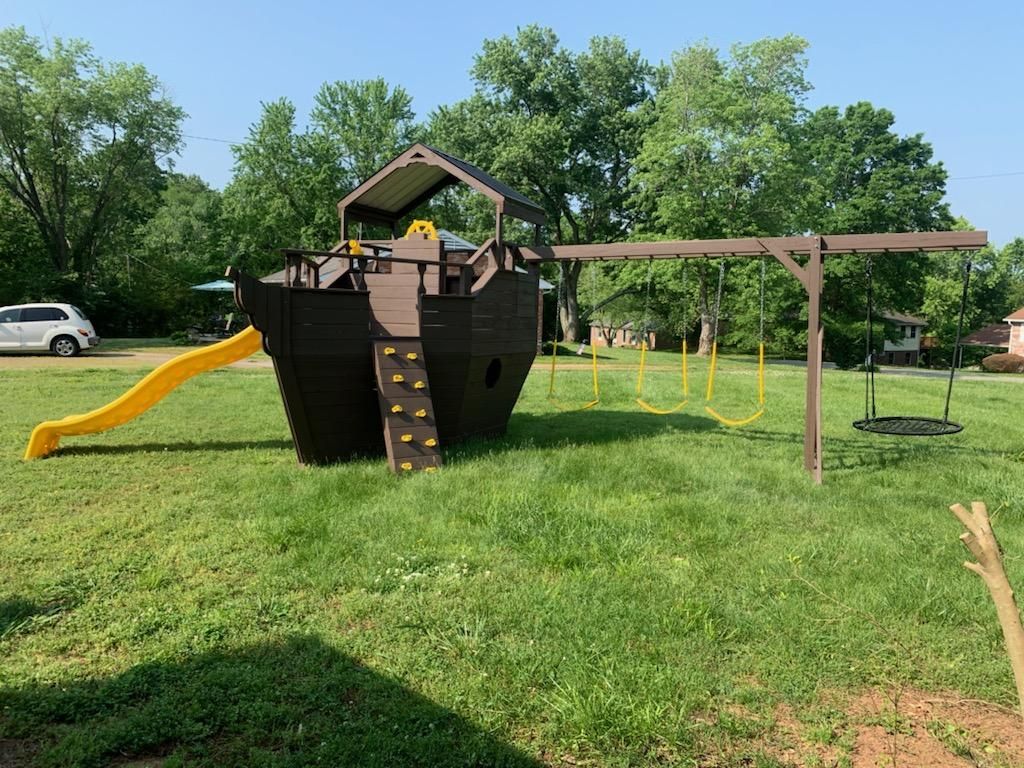
Annual Playset Maintenance Checklist: What Every Parent Should Do
A backyard playset can provide years of fun, but like any outdoor structure, it needs regular care to stay in good condition. Exposure to sunlight, rain, changing temperatures, and everyday play can gradually cause wear on wood, hardware, swings, slides, and other components.
Setting aside time once or twice a year for a thorough playset inspection can help you catch small problems early and keep your playset looking and performing its best.
Use this annual playset maintenance checklist to know what to inspect, clean, tighten, and maintain.
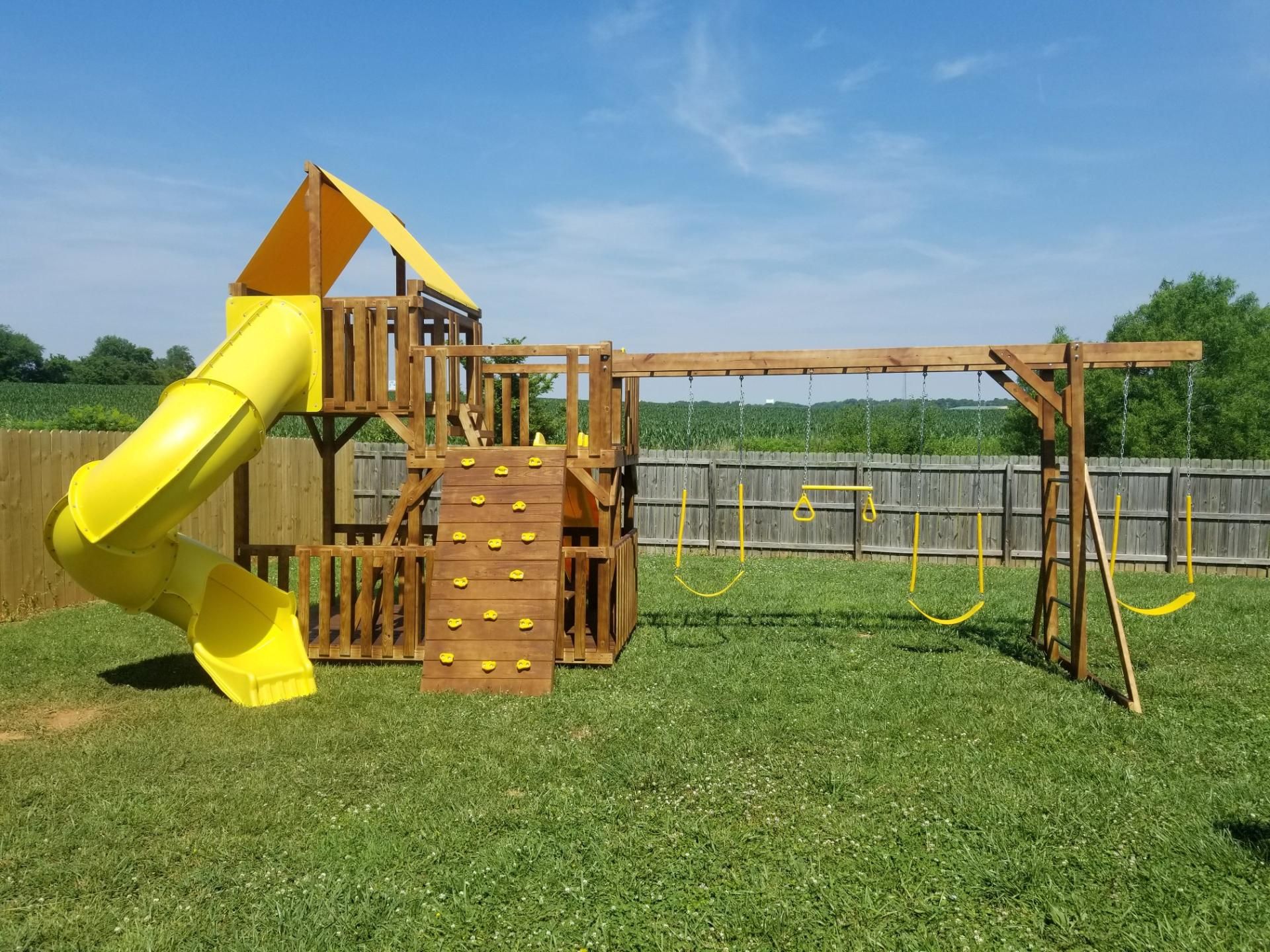
1. Inspect the Entire Playset
Start by walking around the entire playset and looking for anything that appears different from the previous year.
Pay attention to:
- Cracked or damaged wood
- Loose boards
- Splintering or rough areas
- Worn or faded stain
- Loose hardware
- Damaged swings or accessories
- Unstable components
- Signs of excessive moisture
- Areas where the playset may have shifted
Don't forget to look underneath platforms and around areas that aren't immediately visible.
If you notice significant structural damage or instability, stop using the affected portion of the playset until it can be properly repaired.
2. Check and Tighten the Hardware
Kids put playsets through a lot. Running, swinging, climbing, and jumping can gradually loosen connection points.
Check bolts, screws, fasteners, brackets, and other hardware throughout the structure. Pay particular attention to areas that experience frequent movement, including swings, ladders, climbing features, and railings.
Loose hardware should be tightened appropriately. Damaged, missing, or heavily worn components may need to be replaced.
This is one of the most important items to include in your annual playset maintenance routine.
3. Look for Splinters and Rough Wood
Wooden playsets are constantly exposed to outdoor conditions. Over time, some areas can become rough or develop splinters.
Carefully inspect frequently touched surfaces, including:
- Handrails
- Ladder rungs
- Platforms
- Climbing walls
- Wooden steps
- Entry points
- Areas around slides
Rough sections may need to be sanded smooth.
Regularly addressing these areas helps maintain a smoother surface for little hands and feet.
4. Inspect Swings, Chains, and Ropes
Swings and other moving accessories experience repeated stress, making them especially important to inspect.
Look closely at swing seats, chains, ropes, hooks, connectors, and mounting hardware.
Check for signs of excessive wear, cracking, fraying, bending, or loose connections. Make sure each swing is securely attached before allowing children to use it.
If an accessory looks damaged or questionable, replace or repair it before returning the playset to normal use.
5. Check Slides and Climbing Features
Slides, rock walls, monkey bars, ladders, and other climbing features should also receive a thorough annual inspection.
Make sure slides remain securely attached and don't have cracks, sharp edges, or damaged sections.
For climbing features, check each connection point and make sure handholds, steps, bars, and other components are secure.
As your children grow, this can also be a good time to evaluate whether the playset's current accessories still fit their ages and interests.
6. Clean the Playset
Outdoor playsets naturally collect dirt, pollen, leaves, cobwebs, bird droppings, and other debris.
Give the playset a thorough cleaning using methods appropriate for its materials. Avoid using excessive pressure on wooden surfaces, as aggressive cleaning can potentially damage the wood.
Pay particular attention to platforms, steps, corners, underneath roofs, and other areas where debris tends to accumulate.
Once cleaned, allow wooden components to dry thoroughly.
7. Check the Wood's Finish
Stain and sealer help protect wooden playsets from outdoor exposure.
Take a close look at the condition of the wood. Fading, discoloration, roughness, or areas where the finish has noticeably worn away may indicate that refinishing is needed.
The amount of maintenance required will depend on factors such as weather exposure, sunlight, moisture, and the condition of the existing finish.
Keeping up with the protective finish can help preserve both the appearance and longevity of your wooden playset.
8. Look for Signs of Moisture Problems
Moisture can be especially hard on outdoor wooden structures when the wood remains damp for extended periods.
Check the areas where wooden supports meet the ground and look for places where water collects after rainfall.
Leaves, grass clippings, and other organic debris shouldn't be allowed to pile up against the structure because they can hold moisture against the wood.
If you regularly notice standing water around your playset, consider improving drainage in the surrounding area.
9. Inspect the Ground Around the Playset
Your annual inspection should include more than the playset itself.
Look at the entire play area and make sure the ground hasn't significantly shifted or eroded. Check for exposed roots, rocks, holes, or other changes that could affect the area around the playset.
If you use mulch or another protective ground covering, inspect its depth and condition and replenish it when necessary.
10. Trim Nearby Trees and Vegetation
Trees can provide welcome shade, but branches and vegetation shouldn't interfere with the playset.
Trim back branches that hang too close to the structure and remove fallen limbs after storms.
Bushes, weeds, and other vegetation should also be kept under control around the play area. Maintaining some space around the structure can improve airflow and make it easier to spot potential maintenance issues.
11. Check for Storm Damage
Strong winds, heavy rain, snow, and severe storms can affect outdoor structures.
After major weather events, perform an additional inspection instead of waiting for your regular annual maintenance.
Look for fallen branches, shifted components, loose hardware, damaged accessories, and other visible changes.
If anything appears unstable, have it repaired before children begin playing on the structure again.
12. Decide Whether It's Time for Professional Maintenance
Some annual maintenance can be handled at home, but eventually a wooden playset may need more extensive attention.
Professional maintenance may be a good option when the playset has:
- Significant fading or weathering
- Multiple rough or splintered areas
- Cracked or damaged wood
- Worn stain or sealer
- Loose or damaged components
- Repairs that require disassembly
- Structural concerns you're unsure how to address
Professional maintenance can help restore an aging playset while giving you an opportunity to address repairs and upgrades at the same time.
When Is the Best Time to Inspect Your Playset?
Spring is a great time to perform a thorough inspection, especially before children begin spending more time outdoors.
You may also want to perform another inspection in the fall before colder weather arrives.
However, you shouldn't wait for your annual inspection if something doesn't look or feel right. Playsets should be checked periodically throughout the year, particularly after severe weather or unusually heavy use.
Keep Your Emerald Playset Ready for More Backyard Adventures
Regular maintenance can help your wooden playset continue looking great and providing years of outdoor fun.
Emerald Playsets builds handcrafted wooden playsets designed with durability and family fun in mind. For previous Emerald Playsets customers, we also offer professional playset maintenance and repair services to help keep your investment in great condition.
From sanding and resealing to tightening connection points and addressing worn components, our team can help give your Emerald Playset the attention it needs.
Contact Emerald Playsets today to learn more about professional playset maintenance and keep your backyard ready for another year of play.